- Countertops
Quartz vs. Granite vs. Quartzite: Which Countertop Is Right for Your Kitchen?
September 8, 2026
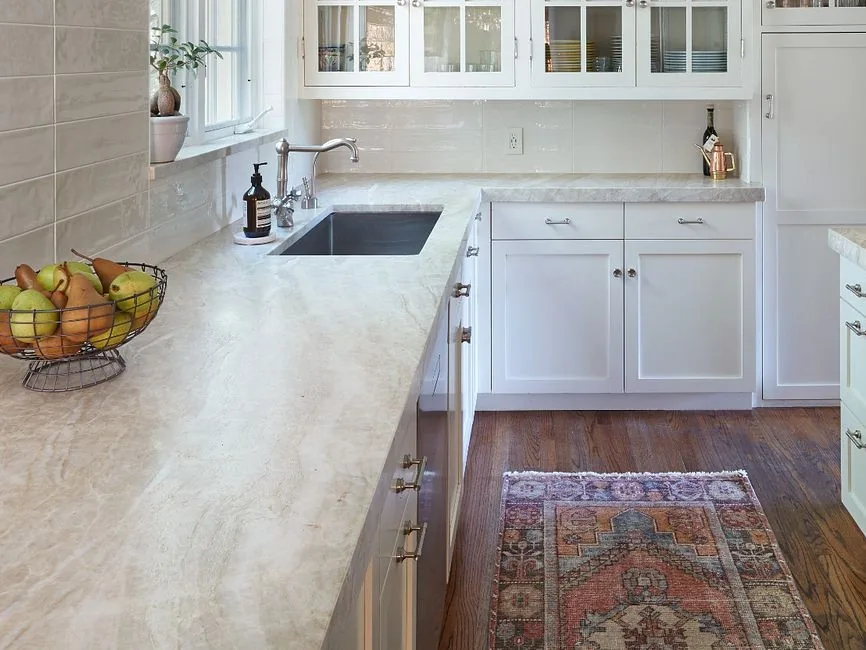
Choosing new countertops usually comes down to three names: quartz, granite and quartzite. They can look surprisingly alike in photos, but they live very differently in a real kitchen. One never needs sealing, one is a classic for good reason, and one is the natural stone everyone is asking about right now. Here’s how to tell which one fits the way you cook, clean and live.
For Easy Living: Quartz Countertops
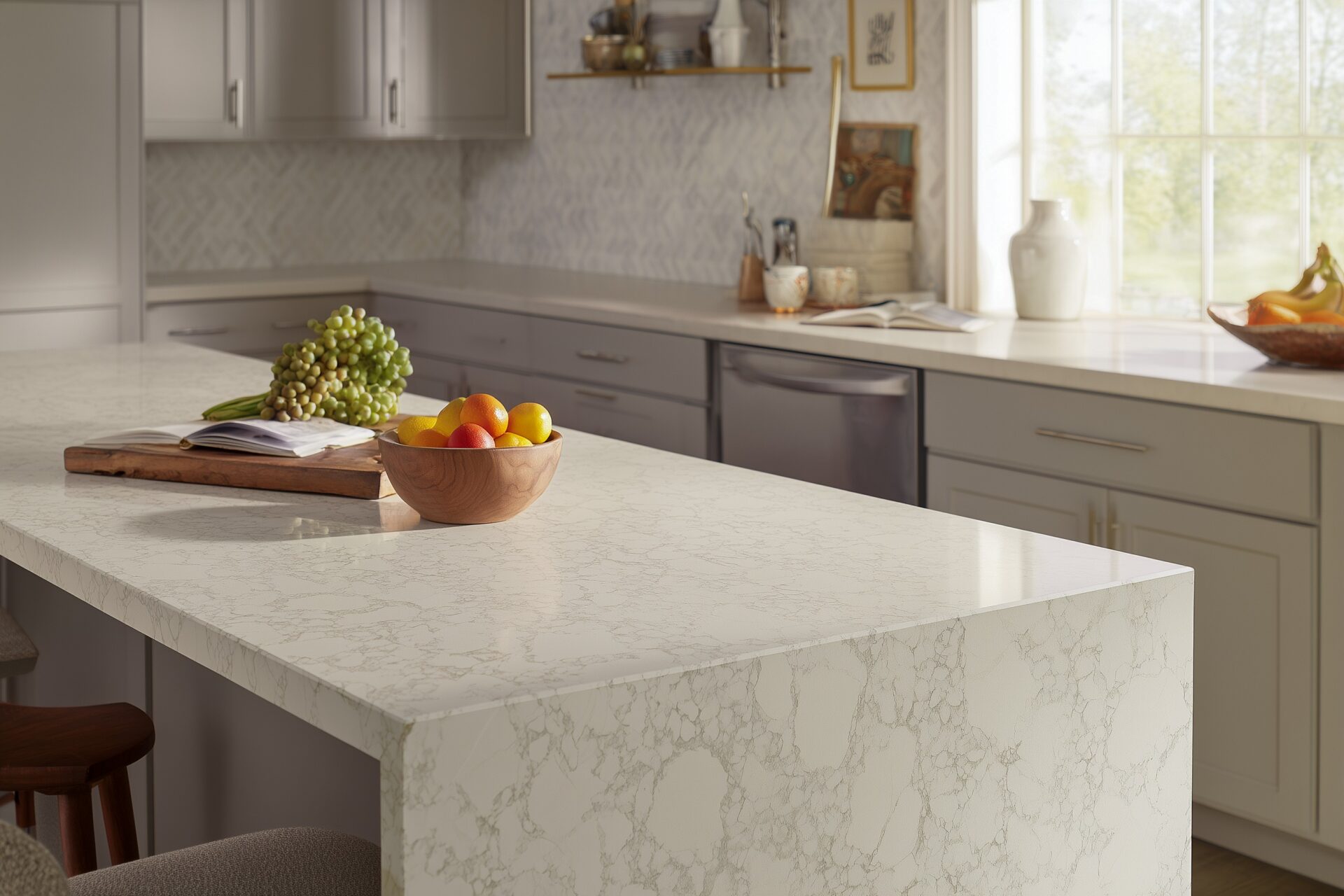
Quartz is engineered stone, made mostly of ground natural quartz bound with resin. That gives it a consistent color and pattern from slab to slab, and a surface that never needs sealing. Brands like Cambria, Silestone and MSI make everything from bright whites to designs that mimic marble and quartzite.
- Best For: Busy families, rental properties and anyone who wants a low-maintenance surface with a clean, uniform look.
- Keep in Mind: The resin in quartz doesn’t love direct high heat, so use a trivet for pots and pans straight off the stove. Most quartz is made for indoor use, so it’s not the pick for an outdoor kitchen.
For Timeless Character: Granite Countertops
Granite is quarried natural stone, so no two slabs are exactly alike. It handles heat well, holds up to everyday cooking and comes in an enormous range of colors, from soft whites to deep blues and blacks. If you’re still deciding on a color, our granite colors guide walks through some of the most popular choices.
- Best For: Cooks who want a durable, heat-tolerant surface, outdoor kitchens and homeowners who love one-of-a-kind natural patterns.
- Keep in Mind: Granite should be sealed to help it resist stains. How often depends on the stone, and we’ll tell you what yours needs.

For Natural Luxury: Quartzite Countertops
Quartzite is natural stone that started as sandstone and was transformed by heat and pressure into one of the hardest countertop materials you can buy. It has the soft, flowing veining people love in marble, with much more durability. Taj Mahal quartzite, with its warm white background and gentle gold veining, is one of the most searched-for stones right now. Our Taj Mahal quartzite guide covers cabinets, backsplashes and care. You can see it and other natural stone slabs in person in our Denton slab yard.
- Best For: Homeowners who want the look of marble with the toughness of natural stone, especially in kitchens with white or warm wood cabinets.
- Keep in Mind: Quartzite needs sealing, like granite. Some stones sold as “quartzite” behave more like marble, so take a sample home and live with it before you commit. Our quartzite care guide explains what to expect.
Your Top Countertop Questions, Answered
Which is better, quartz or granite?
Neither is better across the board. Quartz wins on low maintenance and consistent color. Granite wins on heat tolerance, outdoor use and natural one-of-a-kind patterns. The right answer depends on how you use your kitchen.
Should I get quartz or quartzite?
If you want the look of marble with no sealing, choose quartz. If you want real natural stone with marble-like veining and you don’t mind sealing, quartzite is hard to beat.
Is quartz or granite cheaper?
They often overlap. Many granites and many quartz colors land in a similar range, and quartzite usually costs more. Because we sell most quartz and natural stone by the square foot, you only buy what your project needs. Leftover remnants can lower the cost of vanities and small projects even further. Ask what remnants we have in stock.
Can I put a hot cup of coffee on quartz?
Yes, a coffee mug is fine. A pan straight from the stove or oven is different, so use a trivet on quartz. Granite and quartzite handle heat much better.
Is granite outdated in 2026?
No. Dated granite usually means a busy, speckled pattern paired with an old backsplash. Today’s granites include calm whites, soft grays and bold statement stones that look fresh with modern cabinets.
What is the most popular countertop right now?
White and warm-white looks lead the way, in quartz designs and in natural stones like Taj Mahal quartzite.
Can I use Clorox wipes on my countertops?
Skip bleach wipes and harsh cleaners for daily cleaning. Mild dish soap and warm water is the safest everyday routine for quartz, granite and quartzite. Our care and maintenance guide covers the details.
What can ruin a quartz countertop?
Direct high heat, harsh chemicals and long-term sun exposure are the big three. Treat it kindly and quartz will look great for years.
Should my countertop be lighter or darker than my floor?
Most kitchens look best with some contrast. Light countertops over a darker floor feel bright and open, and a darker countertop can anchor a light floor. Bring a flooring sample when you visit, and we’ll lay it next to the slabs. Need new floors too? Our sister company, The Design House, is right here in Denton.
How to Choose the Right Countertop
- Be honest about how you cook. If hot pans land on the counter, lean toward granite or quartzite. If you’d rather never think about sealing, lean toward quartz.
- See full slabs in person. Photos can’t show the depth of natural stone or how veining runs across a whole slab. Browse our inspiration gallery first, then visit our Denton showroom and slab yard.
- Bring your samples. Cabinet doors, flooring, tile and paint swatches help you see the full picture.
- Think about where it’s going. Outdoor kitchens and sunny spots call for granite or porcelain slabs, not most quartz.
Find Your Countertop at Stonemeyer Granite
Whether you’re leaning toward quartz, granite or quartzite, the best next step is to see them side by side. At our Denton showroom and slab yard, you can compare full slabs, take home samples and get honest advice from our team. We fabricate and install everything in house, and we offer financing with approved credit.
Schedule your free estimate today, or read how to prepare for new countertops so you know what to expect.
- Granite
- Kitchen Countertops
- Natural Stone
- Quartzite
You Might Also Like
-

- Countertops
October 20, 2026
How to Update Your Kitchen Countertops Without a Full Remodel
-

- Countertops
September 22, 2026
Taj Mahal Quartzite: Cabinets, Backsplashes, Care and Look-Alikes
-

- Countertops
August 17, 2026
What Denton Homeowners Need to Know About Countertop Fabrication and Installation